I am not originally from Oswego, New York. But since moving here, people have told me there is a long-standing, maybe even a bit of an unreasonable rivalry between the East Side and the West Side of town. I don't know if it’s a serious rivalry or not, but I don’t ever think about it, nor do those I know. But apparently, it’s there.
We drive over the bridge on 104 to go to the stores or run errands and live life, but two thousand years ago, there was a rivalry just like that, but much deeper. It was a division of religion, culture, and ancient customs. Jews saw Samaritans as inferior. In Gen-Z lingo, Jews saw Samaritans as "Opps"—the opposition, the people you avoid and stay at odds with.
In a time like that, Jesus, who was born a Jew, stops at a well in a town of Samaritans. He knew exactly who would be there: a woman drawing water, in desperate need of something more than just a drink.
I can relate to this woman’s position. I was born in a Christian home in South India where our religion was a minority and often mistreated. More than that, I was born into a very low caste. In that society, we were seen as people of no value. Asking for a drink was out of the question; people would not talk to us, they would not touch us, and some would not even look at us.
When I read the story of Jesus and the Samaritan woman in John 4:1-15, I see a Savior who deliberately steps over these same kinds of social and cultural walls.
John 4:1-15 Excerpt: "Jesus said to her, 'Give me a drink.' The Samaritan woman said to him, 'How is it that you, a Jew, ask for a drink from me, a woman of Samaria?' ... Jesus answered her, 'If you knew the gift of God... you would have asked him, and he would have given you living water.'"
The Divine Detour
Most Jews traveling from Judea in the South to Galilee in the North would take a long route, miles out of their way just to avoid Samaria. They didn't even want to feel the dust from that part of the region. But the Bible says Jesus "had to" pass through Samaria. This wasn't a geographic necessity; it was a divine one.
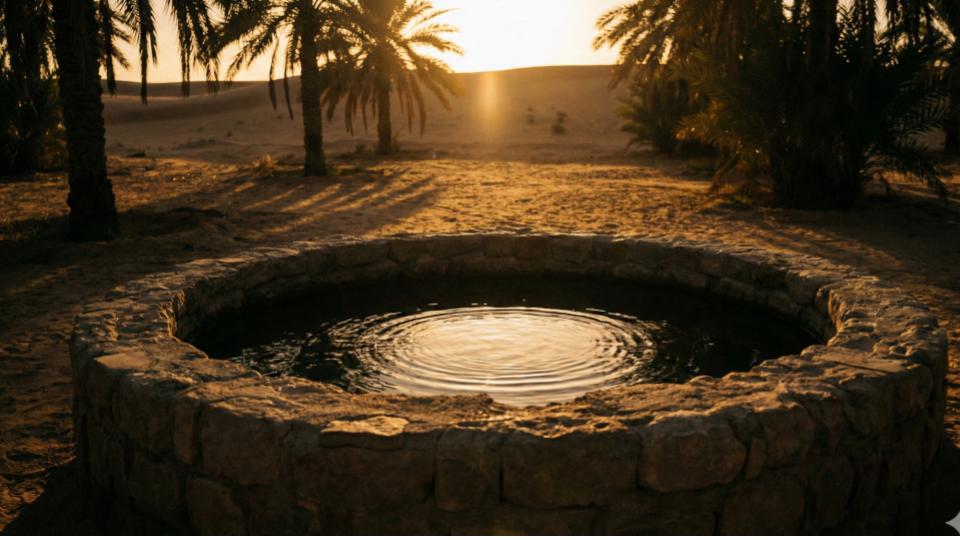
At the "sixth hour," high noon, the hottest part of the day, Jesus sat by Jacob's well. Most women drew water earlier to avoid the heat, but this woman was there at noon, likely because she was hiding. Jesus was weary and tired, yet He waited for her in the heat. To reach her, He broke every rule in the book:
- The Route: He chose the town everyone avoided.
- The Stop: He rested in a forbidden place.
- The Water: He was willing to drink from an "unclean" vessel.
- The Person: He started a conversation with a lone woman in public.
Often, God prompts us to take our own "detours," to talk to someone we do not know, to pray for someone in need, or to spend time with someone who requires comfort. Jesus showed us that we might have to go out of our way to show that we love.
Choosing Connection Over Conflict
The woman's first response to Jesus was shock: “Woahh! You guys don't even talk to us, and you’re asking me for water?"
Jesus wasn't just breaking rules; He was offering salvation. It reminds me of Peter in Acts 3:6, who told a lame man, "Silver or gold I do not have, but what I do have I give to you." Jesus’ Gospel is more than silver or gold. We are called to be people who engage others regardless of their beliefs.
In our current politically and culturally divided time, the grass is very dry. A small spark can start a massive fire. But we are called to be the water, not the spark. We must treat people with care and choose connections over conflicts.
Dropping the Mask
As Jesus got closer to her heart, the woman tried to deflect. In modern words, she tried to "rage-bait" Him by bringing up theological debates: "Are you greater than our father Jacob? You don’t even have a bucket bro!"
She was building a wall with every question, using "the wells of history" to avoid talking about her own life. But eventually, she reached a point of authentic exhaustion. She had walked that long walk in the noon heat every day and finally realized she was tired of her routine. She dropped the mask and simply said: "Please, give me that water."
The world will always try to distract us with arguments about politics, history, or rituals. But Jesus pulls us back to the Gospel. When He does, don't hide behind history. Be honest about your thirst today.
Final Thoughts
In India, when people ask my family, "What are you guys?" they are really asking about our caste so they can treat us accordingly. But since Jesus saved our family, our answer is different. We say we are Christians.
To many, this is a foreign concept. They don't know how to respond because the old categories don't fit anymore. Jesus gave the Samaritan woman value, and He gives us that same value today. When we see the Image of God in others, we no longer have to fabricate our actions. We can live authentically.
Because of Christ, we see people differently. We see them through love, and that is the only way to truly live.
Reflection
Is there a "bridge" in your life you've been hesitant to cross?
Let your transformation point to Jesus. Choose connection over conflict, and let His living water satisfy your thirst today.